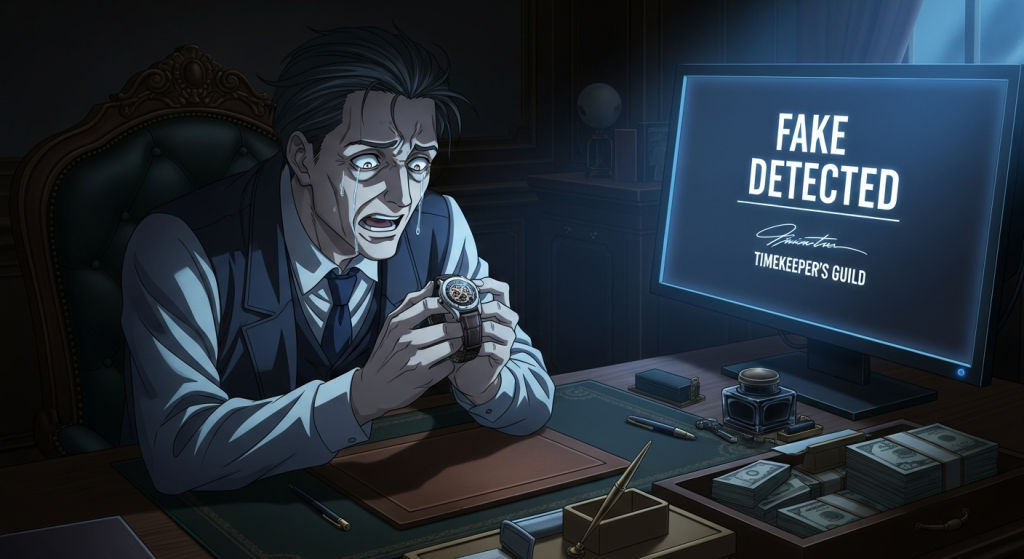
Introduction: “It Looked Perfect in the Photos”
The internet has made buying luxury watches accessible to everyone. But it has also created a playground for scammers.
Every day, collectors lose thousands of dollars believing they have found a “steal.” The photos look genuine, the seller has a few reviews, and the price is just right. But when the package arrives, the dream turns into a nightmare.
Here are three real-life scenarios of how smart buyers got scammed in the global wild west—and how you can ensure this never happens to you.
1. The “Bait and Switch” Scam
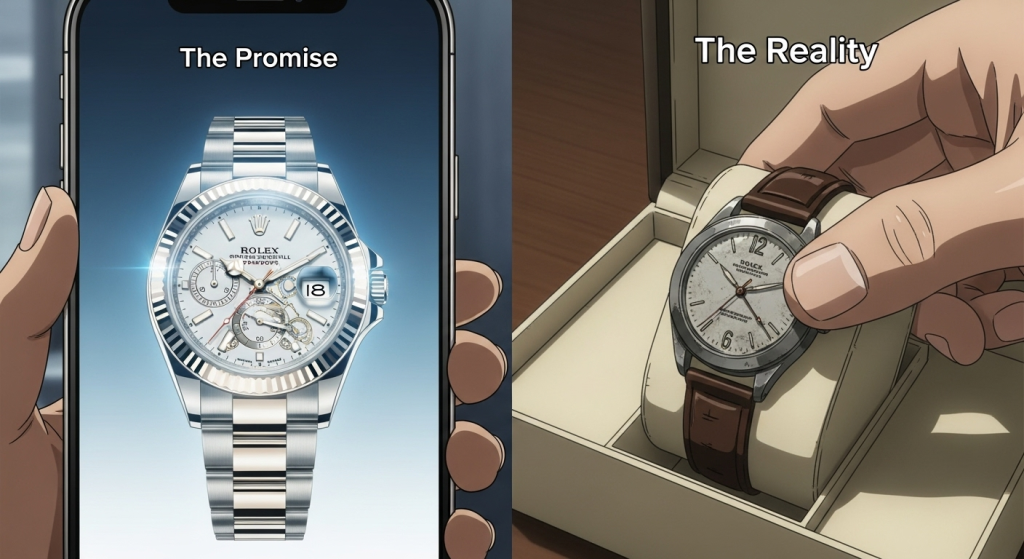
The Scenario: You find a Rolex Daytona listed on a peer-to-peer marketplace. The photos are high-resolution, showing a genuine movement and correct serial numbers. You buy it.
The Horror: When the watch arrives, it looks… off. The steel feels light. The bezel color is slightly wrong. You rush to a local jeweler, and they confirm it: the watch in your hand is a $500 fake.
The Trick: The seller used photos of a real watch (stolen from another website) to sell you a fake. By the time you try to return it, the seller’s account has been deleted.
Lesson: Photos prove nothing. You are buying the seller, not the watch.
2. The “Franken-Watch” Nightmare
The Scenario: You buy a vintage Datejust. It looks authentic on the wrist. You wear it happily for six months until it needs a service.
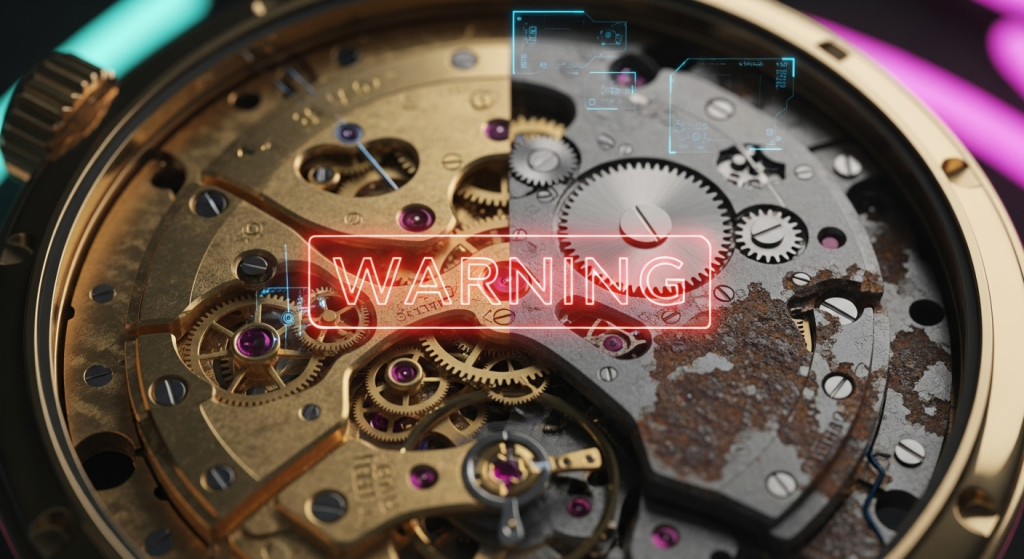
The Horror: The watchmaker opens the case back and shakes his head. “I can’t service this,” he says. Why? Because while the dial and case are genuine Rolex, the movement inside is a patchwork of generic parts and fake components.
The Trick: Scammers assemble watches from broken parts and high-quality fakes to create a “Frankenstein” monster. These are nearly impossible to detect from external photos alone.
Lesson: Only a certified dealer who opens and inspects the movement can guarantee authenticity.
3. The “Super Clone” Trap
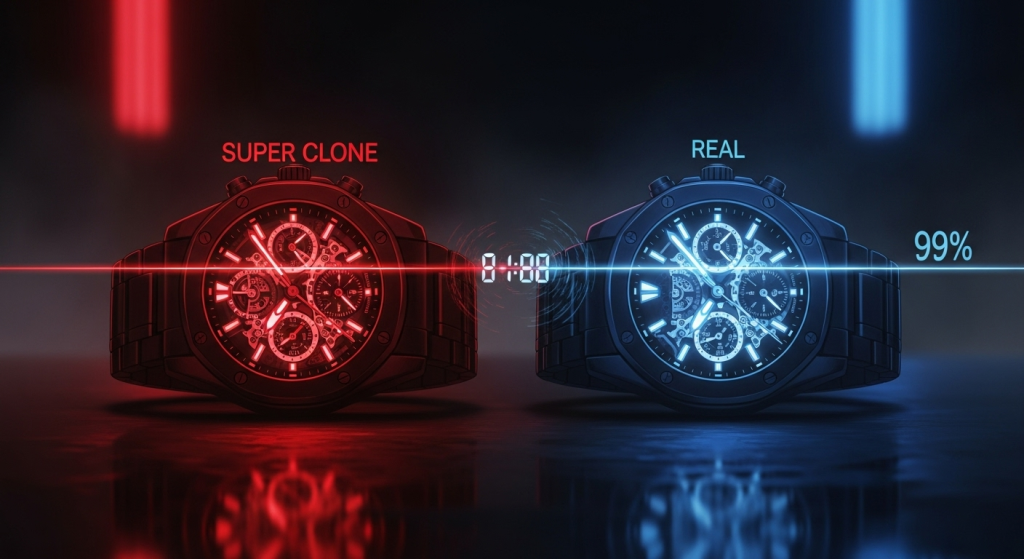
The Scenario: You buy a modern Omega Seamaster. The weight feels right. The lume glows correctly. It comes with a box and card. You think you got a great deal.
The Horror: A year later, you try to trade it in. The dealer puts it on a timegrapher and notices the beat rate is slightly erratic. Upon closer inspection under a microscope, they find the “cloned” movement. It is worthless.
The Trick: Modern “Super Clones” use real 904L steel and ceramic. They are designed to fool even enthusiasts. Without professional verification equipment, you are flying blind.
Lesson: “Too good to be true” prices always hide a Super Clone.

Conclusion: The Only Way to Be 100% Sure
The global market is a minefield. But there is a sanctuary.
In Japan, the sale of fake goods is strictly punished by law, and dealers operate under police licenses (Kobutsusho). Japanese dealers do not just look at the watch; they inspect the movement, verify the provenance, and stake their reputation on every sale.
Don’t let your dream watch become a horror story. Choose the safety, transparency, and rigorous standards of the Japanese market.
At LUXURY JAPAN, we guarantee 100% authenticity on every single timepiece.